Guide to Recognizing Fungal Foot Infections19 min read
Guide to Recognizing Fungal Foot Infections
When a fungal infection attacks your feet or toenails, the discomfort and change in appearance can really make you miss your healthy, fresh, comfortable feet.
Fortunately, foot fungus and toenail fungus are treatable and preventable. The key is knowing how to identify and understand fungal infections so you can get the right treatment and start healing.
Key Takeaways
- Most cases of foot fungus are caused by Athlete’s Foot (tinea pedis). These fungi (called dermatophytes) feed on keratin, the protein found in skin and nails.
- Fungus thrives in warm, moist, dark environments, including sweaty shoes, public pools, locker rooms, towels and shower stalls.
- Fungal foot infections are highly contagious, spreading through contact with fungal spores on a surface or by skin-to-skin contact with an infected person.
- Early recognition and treatment are crucial to curing the fungus. The first signs of infection include itching and burning, which advance to cracking and a foul odor. The sooner treatment is started, the faster and easier the cure.
- Untreated infections worsen and spread. Without treatment, Athlete’s Foot branches out and can spread to toenails (onychomycosis), the groin (jock itch), and other parts of the body.
- Good foot hygiene is the key to preventing foot fungus. Keeping feet clean and dry, wearing breathable shoes, and protecting feet with Odor-Eaters antifungal products can effectively prevent infection.
What Are Fungal Infections of the Feet?
A fungal infection (also called mycosis) of the feet is a superficial skin infection that can affect one or both feet and the toenails.
Types of Fungal Infections Affecting the Feet
The type of fungus that impacts skin and nails (a dermophyte) feeds on dead skin cells. The infection is called “ringworm,” and has nothing to do with a worm. These infections tend to thrive in warm, moist areas of the body.
Different Types of Ringworm
| Common name | Scientific name | Where it occurs |
| Athlete’s Foot | Tinea pedis | Toes and soles of feet |
| Nail fungus | Onychomycosis | Toenails or fingernails |
In each of these infections, a fungus that causes ringworm is living on skin cells, breaking down the keratin (the main protein in hair, skin, and nails) and using it as a food source.
As the fungus feeds on the keratin, it causes a breakdown in the skin and nails, resulting in changes in physical appearance, as well as some very uncomfortable sensations.
Athlete’s Foot (tinea pedis) and toenail fungus (onychomycosis) are types of ringworm that infect the feet.
Athlete’s Foot (Tinea Pedis)
Athlete’s Foot is a fungal infection of the feet that impacts 70% of people at least once in their lifetime.
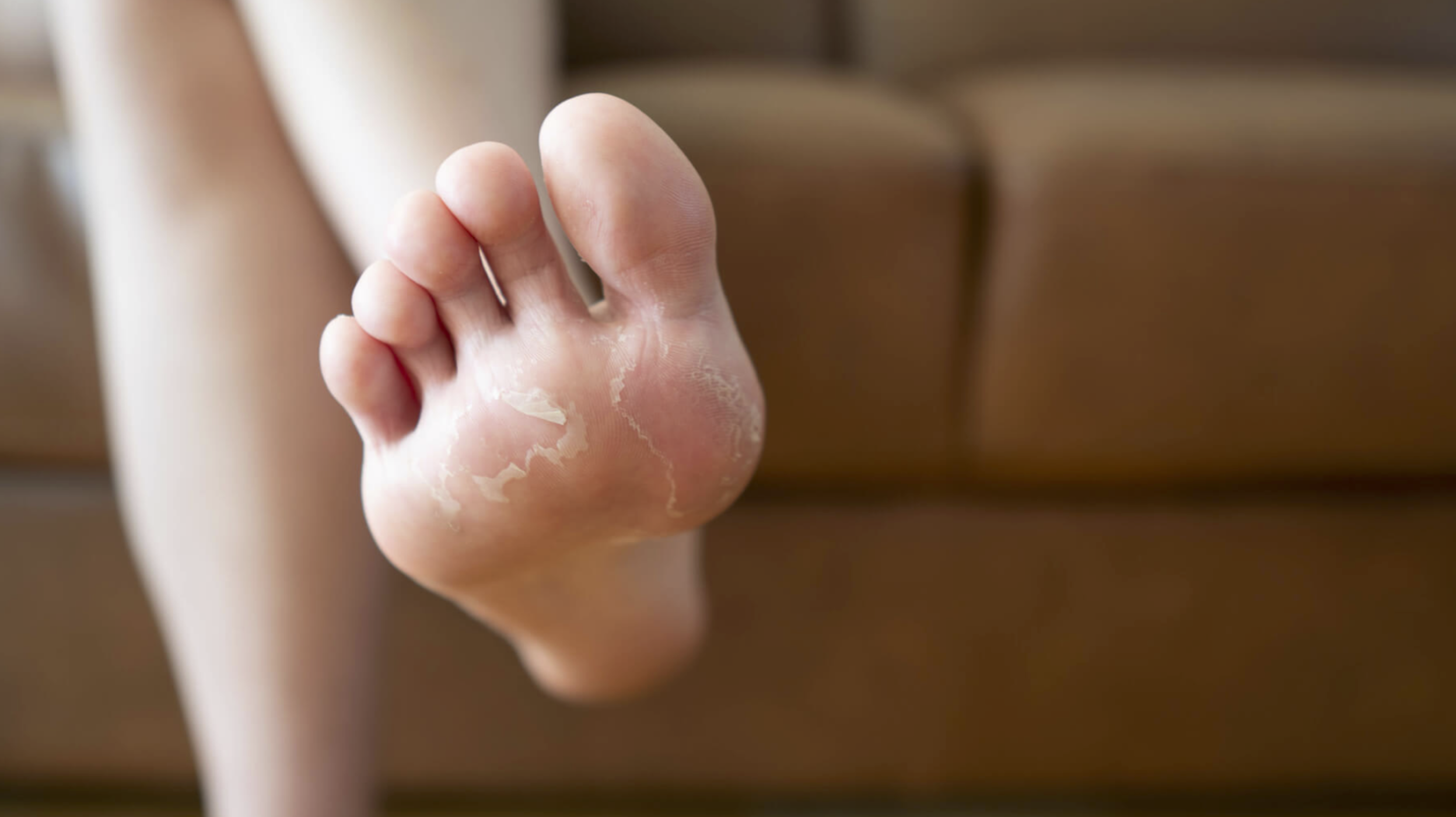
It usually begins on the skin between the toes, causing dryness, cracking, and flaking. The feet begin to feel itchy and burning, and may develop tiny cracks or blisters. Foot odor is also common at this stage.
As the tinea pedis fungal infection advances, it can spread to the soles or sides of the feet. The symptoms get more severe: persistent itchiness, intense burning, and deep cracks.
As the fungus breaks down the keratin in the skin, the feet can become raw and sore. Blisters may break and ooze, and the foot odor becomes more pungent and foul-smelling.
Main Symptoms of Athlete’s Foot
- Dryness
- Redness
- Itching
- Burning
- Soreness
- Scaling
- Cracking
- Swelling
- Peeling
- Foot odor
- Blisters
Athlete’s Foot can accelerate from an uncomfortable feeling to a more serious health condition over time, even resulting in secondary infections. A physician should be consulted if symptoms worsen and become painful.

Pro Tip:
Acting early to treat Athlete’s Foot is also the first big step in preventing toenail fungus.
Toenail Fungus (Onychomycosis)
When Athlete’s Foot spreads to the toenail, it can begin attacking the nail tissue. This type of fungal nail infection is known as onychomycosis.
Symptoms of toenail fungus typically begin on the big toenail as a white or yellow spot or line on the nail.
As the infection progresses, the nail becomes discolored and brittle. Soon, the nail thickens and begins to crumble.
Left untreated, the fungus can spread to other toenails and the toenails of the other foot.
Main Symptoms of Toenail Fungus
- Nail thickening
- Discoloration
- White or yellow line or spot
- Scaling under the nail
- Nail lifting up
- Crumbling
- Splitting
Pro Tip:
Painting your toenails to disguise toenail fungus only creates a darker environment for fungus to grow and restricts airflow to the nail.
Yeast/Candida Infections of the Feet
Candida is a type of fungus, but it is different from the dermophytes that cause typical Athlete’s Foot. Though it is less common than Athlete’s Foot, Candida infections can affect the feet, particularly between the toes.
Candida foot infections typically begin with red, raw-looking skin with distinct white or yellowish borders. The skin may appear wet or torn (as opposed to dry and scaly). Tiny red spots may also appear.
Intense burning and itching accompany the visual symptoms, and the foot may be irritated and tender to the touch. A foul odor may form as the infection advances.
Fortunately, the earlier you act, the more easily Athlete’s Foot can be managed and cured. To ensure lasting results, continue antifungal treatment after symptoms resolve to help prevent the infection from recurring.
Main Symptoms of Candida Foot Infections
- Reddish, wet, raw skin
- White or yellowish borders around affected areas
- Tender, inflamed skin
- Intense itching and burning
- Tiny red dots near infected areas
- Foot odor
Pro Tip:
Your doctor may take a sample of your fungus and culture it in a lab to determine whether your infection is caused by dermatophytes or Candida.
How Do You Get Foot Fungus?
Fungal infections, such as foot fungus, thrive in damp, dark, and warm environments. So, shoes and sweaty feet provide ideal conditions for them to grow and multiply.
The fungus is highly contagious. Bare feet are also susceptible to fungus in public places that provide any combination of moisture, warmth, and darkness, such as:
- Locker rooms
- Swimming pools
- Showers
- Gyms
While those environments tend to have hard surfaces, tinea pedis can also spread through soft fabrics, such as:
- Bath towels
- Carpet
- Socks
- Shoe insoles
- Bed sheets
Fungus on a surface can enter the skin of your feet through a crack or sore. This break in the skin is like an open door for a fungal infection to enter.
If you share a space with someone who has an active fungal foot infection, you can spread it through skin contact or by sharing personal items.
Pro Tip:
If you have one or more high-risk factors, prevention is all the more critical. Practice good foot care and use Odor-Eaters antifungal spray or antifungal cream to help protect your shoes and feet.
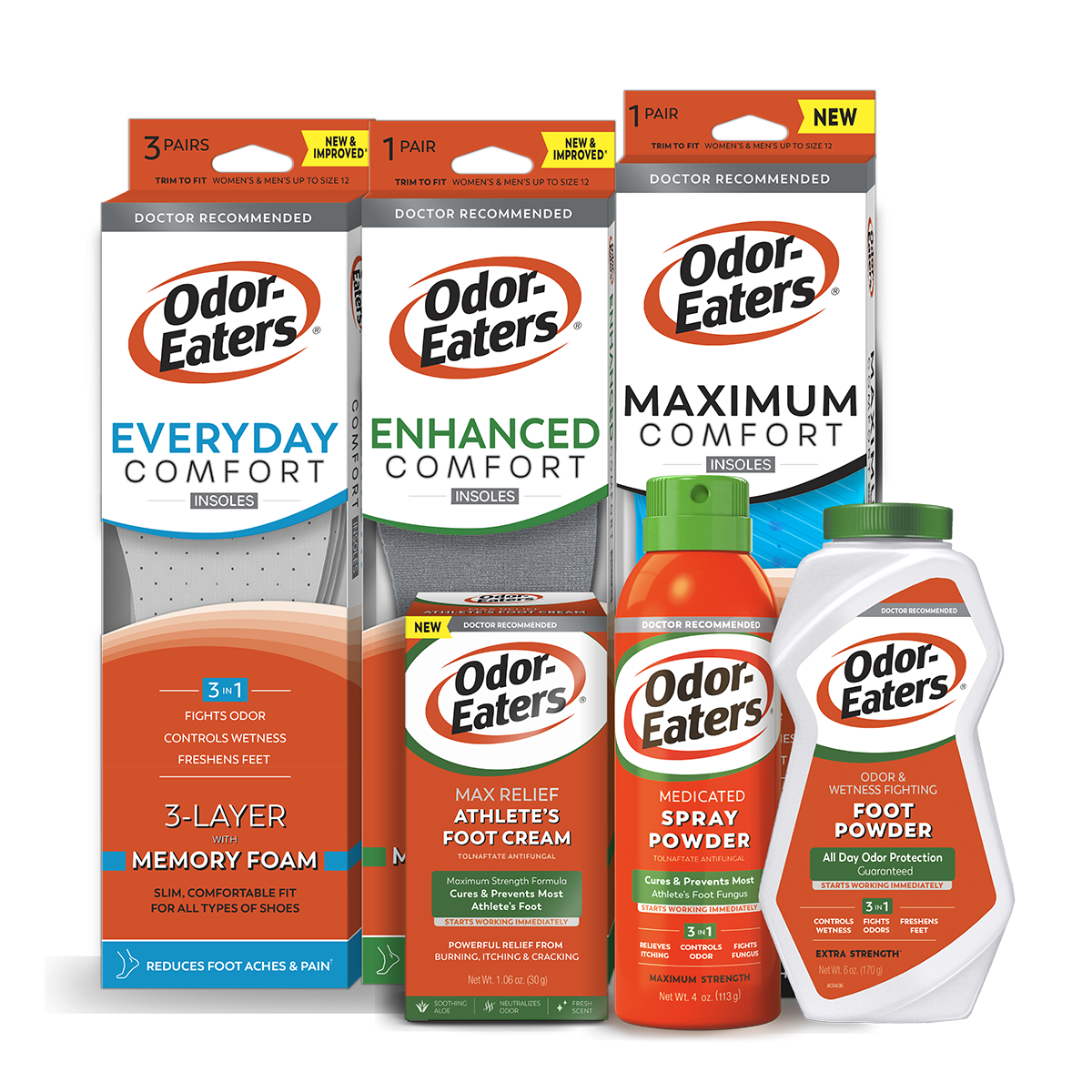
3-in-1: Fights Odor, Controls Wetness, Freshens Feet
A doctor-recommended brand with a selection of products that deliver guaranteed all-day odor protection.
How to Know If Your Feet Have Fungus
Typically, a case of Athlete’s Foot precedes a tinea pedis fungal infection, as the fungus worsens and spreads from the skin of the feet to the toenails. But that is not always the case.
Most often, you will feel the physical symptoms of a foot fungus even before you see visual symptoms.
Early Warning Signs and Symptoms of Foot and Toe Fungus:
- Physical Discomfort: Itching and burning, especially between the toes
- Changes in Appearance of the Foot: Redness, scaling, cracking, rawness, blisters, skin may look white and damp
- Changes in Nail Appearance: White or yellow spots or lines, thickening nail, brittleness, crumbly texture, nail lifting up
- Foot Odor: Foot smell may grow increasingly pungent
- Red Flag Symptoms of a Worsening Infection: Common symptoms worsen; blisters may rupture or discharge pus; the toenail may separate from the nail bed; a foul odor develops.
When to See a Healthcare Provider
If symptoms don’t improve within a few days of starting treatment or signs of infection are present (such as heat, pain, swelling, and redness), notify your primary care doctor, dermatologist, or podiatrist.
A doctor can take a scraping of the skin or toenail and send it to a lab to diagnose the infection and prescribe the correct treatment.
Pro Tip:
Take photos of your foot symptoms with your phone to track progress over time and share with a doctor if needed.
Quick Reference: Identifying Fungal Foot Infections
| Infection type | Location | Key visual signs | Common symptoms | Duration to develop |
| Athlete’s Foot | Between toes, on soles, and sides of feet | Scaling, Peeling, Cracking, Soggy skin | Itching, burning, stinging, foot odor | Days to weeks from contact |
| Toenail fungus | Toenails and nail beds | Yellowing, Thickening, Crumbling, Separating | Brittle nails, foul odor, nail loss | Months to years from contact |
| Candida | Between toes | Red, raw skin. White borders. Tiny red dots | Brittle nails, foul odor, nail loss | Days to weeks from contact |
Conditions That Are Not Toenail Fungus
| Condition | Key differences | When to suspect |
| Eczema | Genetic, not contagious, may ooze and crust | Appears on other parts of the body |
| Contact dermatitis (skin’s reaction to an irritant) | Usually has a trigger and appears as a patchy rash | Recent detergent change, new shoes or socks |
| Psoriasis | Thick, silvery scales with well-defined borders, genetic | Affects elbows, knees, scalp |
| Bacterial infection | Very painful, inflamed, feverish, pus present | Open wounds, sudden onset of symptoms |
What Happens If You Don’t Treat a Fungal Infection?
Athlete’s Foot typically does not go away without treatment and changes to foot hygiene. More often, left untreated, the fungus worsens and spreads across the foot. It can also advance to the toenails, groin, hands, scalp, and other areas.
Similarly, toenail fungus does not clear up without treatment. It gets worse and more difficult to cure the longer it goes without treatment.
Think of it this way: the longer the fungus is left on your feet, the more it branches out and multiplies. The growing fungus can eventually produce more spores, which is what allows it to spread to new areas of the body through contact (usually transmitted by hands touching the infected feet, then touching other parts of the body).
The more the fungus has settled in and branched out, the longer it may take to respond to treatment and clear up.
Pro Tip:
If you suspect you have foot fungus, wear latex or nitrile gloves when handling your feet to avoid transmitting the fungus to other parts of your body.
Preventing Fungal Foot Infections With Odor-Eaters
Odor-Eaters doctor-recommended products start working right away to deliver all-day protection against wetness to stop fungal infections in their tracks. These products help by drying the feet. In doing so, it helps prevent and protect you from foot fungal infections.
Odor-Eaters Spray Powder
Odor-Eaters Spray Powder is an Athlete’s Foot spray with the active ingredient, tolnaftate, a proven antifungal agent that treats the infection by blocking its ability to grow.
In addition to killing the fungus, Odor-Eaters Spray Powder advances Athlete’s Foot treatment by absorbing and controlling foot wetness, further inhibiting the spread of the infection. As a bonus, it also fights foot odor.
How to Use the Spray for Daily Protection:
- Wash and dry the feet thoroughly.
- Shake the container of Odor-Eaters Spray Powder well before use.
- From 8 inches away, spray a thin layer of the product onto the feet.
- Make sure to spray the spaces between your toes.
- Wash hands.
- Put on fresh, clean socks and well-fitting, ventilated shoes.
- Repeat morning and night.
- Continue to use the foot spray as part of a daily routine, even after the infection has cleared.
Odor-Eaters spray is a maximum-strength, maximum-protection treatment against fungal infection that can be purchased over the counter and applied daily at home until the condition is cleared up. It can also be applied daily to keep feet dry, fresh, and fungus-free.
Pro Tip:
For an extra layer of protection against wetness and odor, use Odor-Eaters Foot Spray Powder in your shoes.
Odor-Eaters Athlete’s Foot Cream
Odor-Eaters Athlete’s Foot Cream prevents and cures the symptoms of Athlete’s Foot by providing powerful relief from itching, burning, and scratching with ingredients such as tolnaftate, which neutralizes and absorbs moisture.
While it is tough on odor, it is a non-greasy formula and is easy to use on feet and shoes, and can be used every day.
How to Use the Cream for Daily Protection:
- Wash and dry the feet thoroughly.
- When first opening the tube, remove foil seal.
- Apply a thin layer of the product to the feet once or twice daily.
- Make sure to put cream in the spaces between the toes.
- Wear well-fitting, ventilated shoes, and change shoes and socks at least once daily.
- Wash hands after use.
Odor-Eaters Foot Powder
Odor-Eaters Foot Powder provides extra-strength protection against foot fungus by using super-absorbent ingredients, such as cornstarch and baking soda, that are proven to keep feet drier and promote freshness.
Its talc-free formula makes it safe for daily use. It’s strong enough to combat daily moisture, yet gentle enough for everyday use on shoes.
How to Use the Powder for Daily Protection:
- Use after showering, bathing, or washing your feet.
- Dry feet thoroughly.
- Sprinkle the powder generously between toes and on the tops and soles of your feet.
- Dust the inside of your shoes and socks with the powder.
- Wash your hands after use.
Odor-Eaters Insoles
Odor-Eaters odor-destroying insoles wick away moisture to promote drier, fresher feet and fight foot fungus.
The ventilated insoles contain five advanced ingredients designed to combat odor and manage moisture throughout the day.
Odor-Eaters insoles can be used on top of the existing insole in your shoe, or you can remove that insole and replace it with the Odor-Eaters insole.
- Everyday Comfort Insoles offer a full day of comfort from foot fatigue with soft, memory foam cushioning that forms to your foot. They are thin enough to fit in formal or casual shoes.
- Enhanced Comfort Insoles contains four layers of memory foam to provide ventilation and and start relieving pain immediately. The insole includes 5 odor and wetness fighters, including baking soda, zinc oxide and charcoal.
- Maximum Comfort Insoles feature four layers for maximum comfort and support to relieve pressure on hard-working feet. The extra layer makes them thicker, providing extra cushion and durability.
Both types of soles contain the same odor-fighting ingredients.
How to Use the Insoles for Daily Protection:
- Remove the insoles from the package.
- Refer to the package to select your shoe size: M (Men), L (Ladies), B (Boys), or G (Girls).
- Find the correct guideline on the insole to correspond with your size.
- Trim the insoles along the guideline with sharp scissors.
- Discard the scraps.
- Place the insole into your shoe with the cloth side up.
- Wash your hands after handling the insoles.
How often you change the Odor-Eaters insoles depends on how frequently you wear the shoes, the activities you engage in while wearing them, and how quickly you wear out.
If you notice that the insoles are no longer absorbing moisture or aren’t smelling fresh, it’s time to swap them out for a fresh pair.
Pro Tip:
For maximum freshness, remove your Odor-Eaters insoles after each wear to allow shoes and insoles to dry more quickly and thoroughly.
Final Thoughts
Fungal foot infections can affect anyone, and they are fast-spreading. If you understand how foot fungus works and know how to recognize it early, you can identify the treatment you need and be on the road to recovery within a week.
The key to effective treatment is acting early. Begin treatment at the first sign of infection, and if symptoms don’t start to improve within a few days, consult your doctor to make sure you are on the right track.
Daily use of Odor-Eaters products helps to stop the spread of foot fungus and prevent it from returning. By including Odor-Eaters as part of your daily foot hygiene routine, you can feel confident that you are protecting your feet to keep them healthy and fungus-free.
FAQ
- What Do Itchy Feet Indicate?
Itchy feet can be a sign of several conditions, with foot fungus being one of the most common instances. Itching can also be caused by dry skin, contact with an irritant, eczema, or an allergic reaction to something. If none of those factors are an issue, and you suspect Athlete’s Foot, try Odor-Eaters Spray Powder. If itching is persistent, worsens, or is accompanied by other symptoms, it should be evaluated by a healthcare provider.
- Do You Need to Throw Away Shoes After Having Foot Fungus?
You don’t necessarily need to throw away your shoes, but you should treat and sanitize them to prevent them from housing fungal spores, which can survive in shoes for months. Disinfect shoes with an antifungal spray or powder. Allow shoes to air out after wearing them, and consider alternating between different shoes to allow them to fully dry between wears. If the shoes are old, worn, and difficult to clean, consider replacing them to avoid reinfection.
- How Do You Kill Foot Fungus on Bed Sheets?
Fungal spores can survive on bed sheets, towels, and other fabrics, especially in warm, moist conditions. To kill the fungus, wash bedding, socks, towels, and other fabrics in hot water (at least 140°F) with antifungal additives like bleach or laundry sanitizer when possible (and safe for the fabrics). Dry fabrics on high heat and change bed linens weekly – or more often during active infections.
- How Can You Tell If Your Feet Have Fungus or Just Dry Skin?
Dry skin can cause symptoms similar to those of foot fungus, such as itching, cracking, and even a burning sensation due to the irritation of being so dry. But dry skin doesn’t typically start between the toes; it tends to affect the heel and sole first. It also tends to affect both feet at once, while Athlete’s Foot may start on just one foot. Dry skin typically improves with moisturizer and isn’t accompanied by the other symptoms of foot fungus (soggy skin, blisters, foul smell). If you are unsure of what is causing your dry skin, seek the attention of a doctor to ensure
Fight Foot Odor & Control Wetness
It’s important for everyone to understand how foot odor and excess moisture are connected. The most effective way to fight foot odor is simple: keep your feet and shoes clean and dry. Make it a habit to change your socks daily and rotate your shoes every few days so they have time to fully air out and dry between wears.
You can also use Odor-Eaters products to help absorb moisture and neutralize odor. If odor persists, or if you notice cracks, cuts, or sores between your toes, it may signal a fungal issue and is a good reason to consult a podiatrist for further guidance.